Travel organization · Fabric care · Accessories
Silk Laundry Storage for Travel: What to Consider
A separate place for worn clothing can bring order to a suitcase that is constantly changing. Silk laundry bags offer a lightweight, soft-sided way to contain garments between wash days. Before choosing one, consider its capacity, closure, care requirements and how it will fit into your own travel routine.
A small system for a suitcase in motion
Travel has its own geography. Clean shirts begin in neat stacks; socks find corners; a damp swimsuit may need a separate pocket; and, as the days pass, worn clothes accumulate. Without a plan, clean and used garments can gradually mingle. A dedicated laundry pouch gives the latter a defined place, making it easier to find what is ready to wear and what should go straight into the wash when you return.
The idea is simple, but the details matter. A bag that is too small may become difficult to close after a few days. One that is bulky or heavy can take up space better used for clothing. Material affects weight, handling and care, while the closure determines how easily the bag can be packed and carried. Thinking through these practical points before a trip helps turn a fabric accessory into a useful part of a packing system.
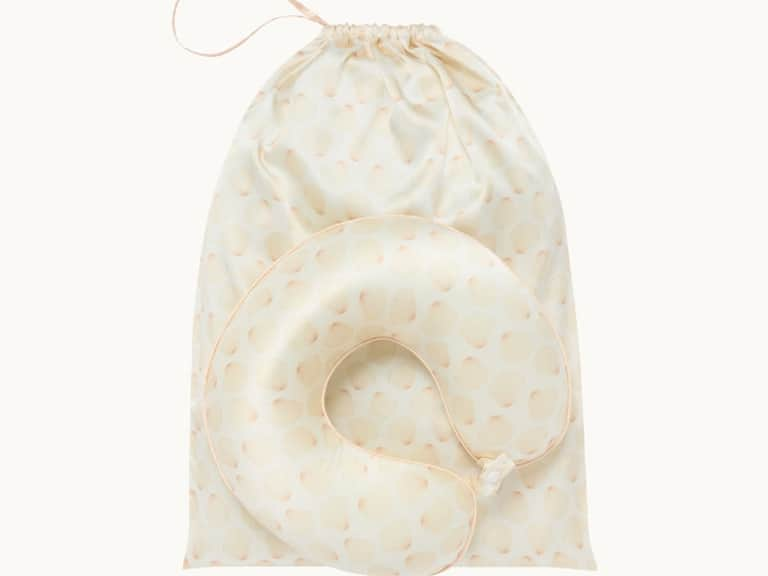
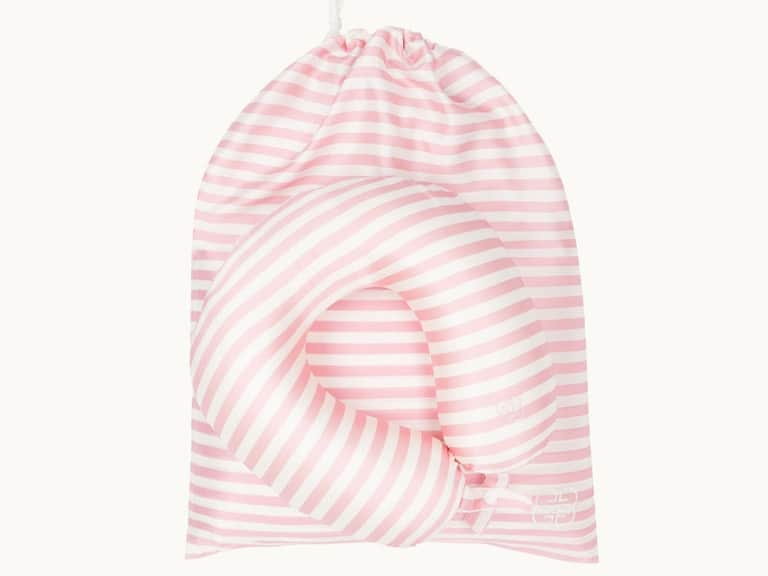
Silk is one option for this purpose. It is soft and light, and a drawstring design can be folded or tucked away when empty. Gingerlily’s Silk Laundry Bag - Pink & Ivory Stripe is made from 100% Mulberry silk, listed at 19 Momme, and measures 21 by 16 inches. A second option, the Silk Laundry Bag Seashells, is also described as 100% Mulberry silk at 19 Momme, with a drawstring closure and a seashell motif. Their specifications provide a useful starting point for comparing a travel laundry bag with the needs of a particular journey.
What a laundry bag can—and cannot—do
A laundry bag is a container, not a washing solution. Its primary role is to keep worn clothing together and apart from clean garments. That separation can help maintain order in a suitcase, hotel room or weekend bag. It may also make unpacking more straightforward: the contents can be lifted out as a group rather than sorted item by item from several compartments.
It is worth being precise about what “separate” means. A fabric pouch is not necessarily waterproof, airtight or designed to isolate moisture and odor completely. If clothing is wet, muddy or heavily soiled, placing it directly beside dry laundry may not be a good idea. Let damp items dry where practical, or use a suitable waterproof barrier for them before they go into a larger laundry bag. A silk pouch should not be treated as a substitute for a sealed wet bag or a protective case.
Nor does a laundry pouch need to hold every item worn on a trip. Some travelers use it for everyday clothing and keep swimwear, workout gear or delicate items apart. Others prefer to sort by person, garment type or wash load. The most useful arrangement is the one that remains easy to follow when the suitcase is open and the trip is underway—not an elaborate system that requires constant rearranging.
Consider where the bag will live during the journey. A pouch that stays inside a suitcase has different demands from one carried to a shared laundry room. For the first use, low weight and a manageable shape may matter most. For the second, a secure closure and comfortable way to carry it become more relevant. The stated Gingerlily Pink & Ivory Stripe model has silk drawstring handles, which can make it easier to lift and carry, while the Seashells version is described with a drawstring closure. Check the specific product details when choosing, since designs and features are not necessarily identical.
Capacity: judge the dimensions against your itinerary
Capacity is often described in broad terms such as “spacious,” but dimensions are more useful when planning. The Pink & Ivory Stripe laundry bag measures 21 by 16 inches. That gives a clearer reference point than a general capacity claim, but the amount it holds will still depend on fabric thickness, garment size and how loosely or tightly items are packed.
A short trip may produce only a few worn garments. A longer journey, an active itinerary or travel with children can generate laundry more quickly. Rather than assume one bag will suit every trip, consider the rhythm of the days ahead: how many changes of clothing you expect to use, whether laundry facilities will be available, and whether you need to keep more than one category separate.
Think about the bag’s shape when full, too. A soft-sided pouch can adapt to the space around it, but a full one may press against neighboring items. Packing it near the top of a suitcase can make it easier to reach, while placing it in a dedicated compartment may reduce the chance of mixing its contents with clean clothes. If space is tight, leaving room for the laundry bag to expand can be more practical than packing every corner of the case on departure.
It may help to set a simple limit for use. For example, the bag could hold clothes worn since the last wash, or only items that are ready to be laundered. If it becomes too full, that is a cue to wash, transfer or reorganize rather than force the drawstring closed. A flexible packing habit is especially useful on longer trips, when the amount of laundry changes from day to day.
- For a brief trip: Estimate how many garments will need separating before you return.
- For longer travel: Consider whether the bag’s dimensions suit the volume of laundry between wash days.
- For mixed activities: Decide whether damp, delicate or heavily soiled items need a separate container.
- For shared luggage: Plan whether each traveler needs an individual pouch or whether one larger bag is easier to manage.
Silk, weight and everyday handling
Silk is a natural protein fiber, but the word alone does not tell you everything about how a finished bag will behave. Construction, fabric weight, seams and use all influence its performance. Gingerlily lists the Pink & Ivory Stripe bag as 100% Mulberry silk at 19 Momme; the Seashells bag is likewise specified as 100% Mulberry silk and 19 Momme. Momme is a unit used to describe silk fabric weight. It can help distinguish one silk specification from another, though it should not be read as a complete measure of durability or suitability for every use.
A soft fabric can be useful in a crowded suitcase because it does not have the rigid shell of a hard-sided organizer. It can be folded when empty and placed around other items. At the same time, a fabric bag will not provide the structure or impact protection of a hard case. It is intended to contain clothing, not shield fragile objects from pressure or rough handling.
Breathability is another consideration often mentioned in relation to fabric storage. The Pink & Ivory Stripe product description notes breathable fabric and a role in separating dirty laundry from clean garments. In practical terms, a breathable pouch may allow more air exchange than an airtight container, but it does not dry wet clothes instantly or guarantee that damp garments will stay fresh. Moisture management begins with the garments themselves: allow them to dry when possible and avoid leaving wet items packed for extended periods.
Surface and color can also affect how easy a bag is to identify in a suitcase. A striped pink-and-ivory design and a seashell motif are visually distinct options. For some travelers, a recognizable pattern helps separate a laundry pouch from other accessories at a glance. This is a small convenience, but small cues can be valuable when unpacking in unfamiliar rooms or sharing luggage space.
Closure and packing habits
A closure should suit the contents and the way the bag will be handled. Drawstrings are straightforward: pull them to gather the opening, loosen them to add or remove clothing. They do not create an airtight seal, and they should not be expected to contain liquids. Their appeal is ease of use and a simple shape that can be packed without the rigid parts found in some organizers.
Before closing the bag, make sure no garment is caught in the opening. Avoid overfilling it to the point that the drawstring is strained or the fabric is pulled sharply. If the bag has handles, check how it feels when carrying a typical load rather than judging only by its empty weight. A laundry pouch is often easiest to use when it can be opened, filled and closed without disturbing the rest of the suitcase.
Placement can make the system more effective. Keep the laundry bag in a spot that is easy to reach, particularly if you expect to add clothing each evening. Some travelers place it alongside a packing cube or in a suitcase compartment reserved for worn items. Others store it near the bathroom or wardrobe once they arrive. Whatever the arrangement, consistency helps: putting used clothing in the same place each time reduces the chance that it will end up mixed with clean garments.
For a trip with multiple stops, consider how the bag will be used between destinations. If you will unpack and repack frequently, a lightweight, foldable pouch may be convenient. If you will stay in one place and do laundry regularly, the bag may serve mainly as a temporary collection point. The best design is not necessarily the most elaborate; it is the one that fits the pattern of the journey.
Care: read the label before the first wash
Travel accessories are handled often, but silk needs considered care. The Pink & Ivory Stripe product information recommends machine washing on a delicate cycle at no more than 30°C, air drying and cool ironing. Follow the care instructions supplied with the specific item, and check for updated guidance before washing. The Seashells product details identify its material and drawstring closure but do not provide the same full washing instructions in the available description, so consult its care label rather than assume that every silk bag has identical requirements.
When machine washing is permitted, a delicate cycle and cool water can reduce unnecessary agitation. A suitable laundry bag for the laundry bag itself may offer an extra layer of protection, provided the care label allows machine washing. Use a gentle detergent intended for delicate fabrics, and avoid mixing it with items that have rough fasteners or abrasive surfaces. Do not wring silk forcefully; handle it gently after washing.
Air drying is specified for the Pink & Ivory Stripe model. Lay the bag flat or hang it in a way that does not pull the fabric out of shape, away from strong direct heat. If ironing is recommended, use a cool setting and follow the care directions. The goal is not to make the pouch look untouched by travel, but to clean it without exposing the fabric to avoidable heat or stress.
Between trips, empty the bag fully and let it air before storing it. Check seams, drawstrings and the opening for signs of wear. If the pouch is still clean and dry, it may simply need to be folded and stored with other travel accessories. If it needs washing, follow its own instructions. Regular, gentle care can help keep a fabric accessory ready for repeated use, though no care routine can guarantee a particular lifespan.
Choosing between the available Gingerlily options
The two Gingerlily examples differ most clearly in their stated design details. The Pink & Ivory Stripe bag has a stated size of 21 by 16 inches, a 100% Mulberry silk construction at 19 Momme, and silk drawstring handles. Its care information includes a delicate machine wash at up to 30°C, air drying and cool ironing. Those specifics make it possible to compare the bag with a suitcase and a typical laundry load.
The Silk Laundry Bag Seashells is described as 100% Mulberry silk at 19 Momme, with a drawstring closure and a Memo Press seashell motif. Its description presents it as a travel laundry or delicate-storage bag. The available specifications do not list dimensions, so travelers who need a particular capacity should confirm that information before deciding.
Neither appearance nor fabric composition alone determines which option is right. Ask practical questions: Is the size stated and suitable? Can the closure manage the load you expect? Does the care information fit your laundry routine? Will the design be easy to distinguish from other pouches? These questions are more useful than treating a laundry bag as a one-size-fits-all accessory.
Products may also differ in details not captured in a short description. When a specification is important—such as exact dimensions, the construction of handles or care for a motif—check the product page or the label that comes with the item. This is particularly worthwhile for fabric accessories, where washing instructions and intended uses should be clear before the first trip.
A more thoughtful packing routine
A separate laundry pouch can support a calmer approach to packing, but it is only one part of the system. Start by grouping clean clothing according to how you use it: daily outfits, sleepwear, exercise clothing or items for a specific activity. Keep the laundry bag accessible rather than buried beneath everything else. At the end of the day, place worn garments in it once they are dry enough to pack.
For damp swimwear or clothes exposed to rain, use a method appropriate to moisture rather than relying on a silk bag to contain it. For delicate garments that need protection from friction, separate them from rough hardware, shoes or items with sharp edges. A laundry bag can help organize fabric, but it cannot replace careful packing or specialized protection where needed.
On returning home, the distinction between clean and worn clothing can make unpacking more efficient. The laundry pouch can be carried directly to the wash area, while clean items remain separate. Wash the pouch only when its care instructions call for it; frequent unnecessary washing can add work and wear. Once dry, store it with travel essentials so it is ready for the next journey.
Good travel organization is rarely dramatic. It is built from small decisions that reduce confusion: knowing where the spare layer is, keeping toiletries contained, and giving worn clothing a place of its own. A soft-sided silk laundry bag may suit travelers who value a lightweight, fabric-based organizer and are prepared to care for it according to its instructions. The useful choice is ultimately the one that matches the trip’s length, packing space and laundry habits.
Before you pack
- Check the bag’s dimensions against your luggage and expected laundry volume.
- Separate wet or unusually soiled items rather than assuming a fabric pouch is waterproof.
- Confirm the specific material, closure and care instructions for the design you choose.
- Leave enough space for the bag to expand as worn clothing accumulates.
- Air the pouch after use and store it only when clean and dry.
With those details in mind, silk laundry storage becomes less about adding another object to a suitcase and more about giving the journey a simple, repeatable order: clean clothing in one place, worn clothing in another, and a clear path from travel back to home.